AI Study Guide Makers from PDFs: A Comprehensive Overview (Updated 03/24/2026)
AI-powered tools are revolutionizing study habits, instantly summarizing notes, PDFs, and lectures with features from Quizlet, Jotform, and PDF Copilot, enhancing learning efficiency.
The landscape of education is undergoing a significant transformation with the advent of artificial intelligence. Specifically, AI study guide makers are emerging as powerful tools for students seeking to optimize their learning process. These innovative platforms leverage the power of AI to convert various source materials – notes, PDFs, and even lecture slides – into comprehensive and structured study guides.
Traditionally, creating effective study guides was a time-consuming and laborious task. However, AI streamlines this process, automatically summarizing content, identifying key concepts, and organizing information in a logical manner. This allows students to focus on understanding the material rather than spending countless hours on manual preparation. The tools, like Quizlet, are designed to cater to diverse learning styles and preferences, offering a more personalized and efficient study experience.
The Growing Need for Efficient Study Tools
Modern students face unprecedented academic pressures, juggling coursework, extracurricular activities, and often, part-time jobs. This demanding schedule necessitates efficient study tools that maximize learning within limited timeframes. Traditional study methods often prove inadequate, leading to increased stress and decreased comprehension. The need for tools that can quickly distill complex information into manageable formats is paramount.
Furthermore, the sheer volume of information encountered in today’s educational environment requires innovative solutions. AI study guide makers address this challenge by automating the process of knowledge consolidation. Platforms like Jotform and PDF Copilot offer solutions to convert PDFs into quizzes, aiding retention. Students are actively seeking these resources, as evidenced by discussions on platforms like Reddit, highlighting a clear demand for smarter study aids.

Top AI Study Guide Maker Tools
Several platforms now offer AI-driven study guide creation, including Quizlet, Jotform, and PDF Copilot, each providing unique features for efficient PDF processing and learning.
Quizlet’s Study Guide Maker
Quizlet’s innovative Study Guide Maker is rapidly gaining popularity as a powerful tool for students seeking to streamline their learning process. This feature instantly transforms various source materials – notes, PDFs, lecture slides, and even handwritten content – into comprehensive and structured study materials.
Leveraging the capabilities of artificial intelligence, Quizlet’s tool doesn’t simply copy content; it actively summarizes key information and extracts core concepts. This intelligent processing organizes the material into a format optimized for effective studying, saving students valuable time and effort. The AI focuses on distilling complex information into manageable, digestible pieces, making it easier to grasp and retain crucial details. It’s a significant step forward in personalized learning support.

Key Features of Quizlet’s AI Tool
Quizlet’s AI tool boasts several key features designed to maximize study efficiency. Its core strength lies in the rapid conversion of diverse materials – PDFs, notes, and slides – into focused study sets. The AI intelligently summarizes content, identifying and highlighting the most important information for review.
Beyond summarization, the tool excels at extracting key concepts, organizing them logically for better comprehension. This feature allows students to quickly pinpoint essential ideas within larger documents. Furthermore, Quizlet’s AI facilitates the creation of various study modes, including flashcards and practice quizzes, catering to different learning styles and preferences. It’s a versatile and adaptable learning companion.
How Quizlet Summarizes and Extracts Information
Quizlet’s AI leverages advanced algorithms to dissect uploaded PDFs and other materials. Initially, the tool performs Optical Character Recognition (OCR) to convert images of text into machine-readable format. Subsequently, it employs natural language processing (NLP) to understand the context and meaning of the text.
The AI identifies key sentences and phrases, prioritizing information based on frequency, relevance, and position within the document. Summarization is achieved through abstractive techniques, generating concise summaries that capture the core ideas. Key concept extraction relies on identifying nouns, verbs, and relationships between them, building a structured representation of the material for effective learning.
Jotform’s AI Tools for Study Guides
Jotform offers a suite of AI-powered tools designed to streamline study guide creation directly from PDF documents. Users can upload PDFs, and Jotform’s AI will analyze the content, identifying crucial information and organizing it into a structured format. This functionality extends beyond simple summarization, enabling the generation of question banks and flashcards.
The platform’s AI capabilities allow for the creation of interactive study materials, enhancing engagement and retention. Jotform’s tools are particularly useful for converting lengthy PDF-based lecture notes or textbooks into manageable study resources, as highlighted by discussions on Reddit, making complex topics more accessible.
Utilizing Jotform for PDF-Based Study Material
Jotform simplifies the process of transforming PDF documents into effective study aids. Users begin by uploading their PDF files directly into the platform. The AI then meticulously analyzes the document’s content, extracting key concepts, definitions, and important details. This extracted information is then automatically organized into a customizable study guide format.
The platform allows for various output options, including quizzes, flashcards, and concise summaries. Users can further refine the generated materials, adding their own notes and tailoring the content to their specific learning needs. Jotform’s AI tools are designed to save students valuable time and effort, providing a convenient solution for creating comprehensive study resources from PDFs.
PDF Copilot: PDF to Quiz & Study Aid Conversion
PDF Copilot emerges as a specialized tool focused on converting PDF documents into interactive quizzes and comprehensive study aids. Its core functionality centers around intelligently processing uploaded PDFs, identifying crucial information, and restructuring it for optimal learning. The AI doesn’t just summarize; it actively transforms content into question formats.
Users benefit from automatically generated quizzes designed to test comprehension and retention of key concepts. Beyond quizzes, PDF Copilot creates concise study guides, streamlining the review process. This tool is particularly valuable for students seeking a quick and efficient way to assess their understanding of complex materials directly from PDF sources, boosting study effectiveness.
PDF Copilot’s Core Functionality
At its heart, PDF Copilot excels at PDF processing, swiftly converting documents into usable study resources. The tool’s primary function is the intelligent extraction of information, followed by a transformation into various study formats. This includes multiple-choice questions, flashcards, and summarized notes, all derived directly from the uploaded PDF content.
PDF Copilot’s AI algorithms analyze the text, identifying key concepts and relationships to formulate effective learning materials. Users experience a streamlined workflow, eliminating the manual effort of creating study aids. The tool’s efficiency lies in its ability to quickly generate quizzes and study guides, making it a valuable asset for focused revision.

Leveraging Large Language Models (LLMs)
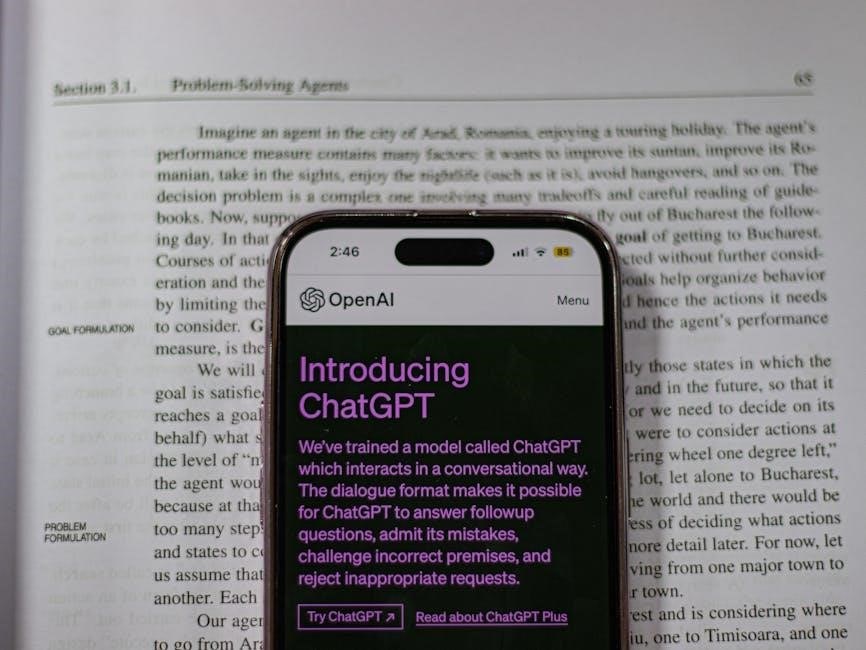
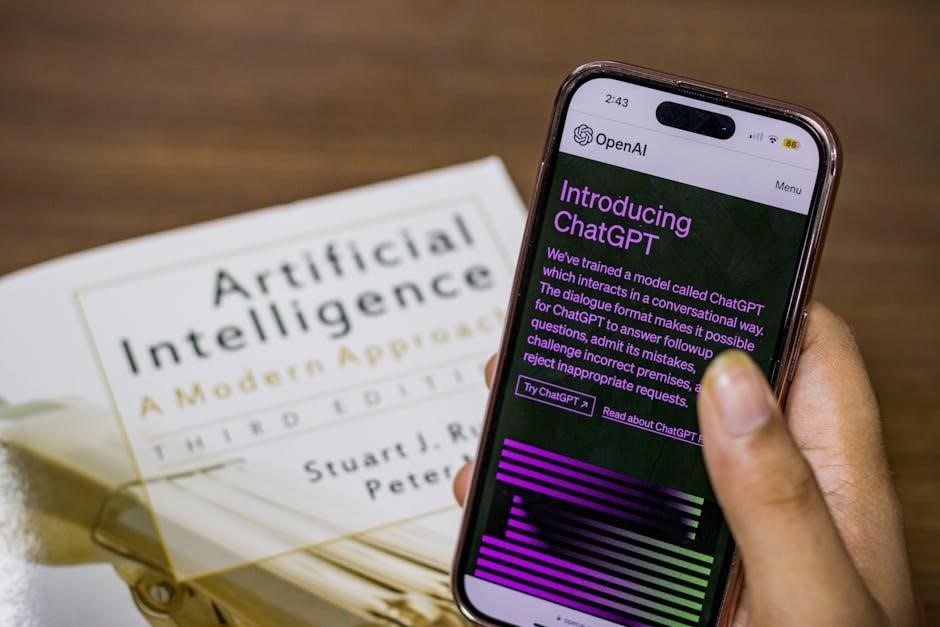
LLMs, like OpenAI’s ChatGPT, are increasingly utilized for study assistance, offering a Socratic tutoring experience and transforming how students interact with learning materials.
OpenAI’s ChatGPT Study Mode
OpenAI recently launched a dedicated “study mode” within its ChatGPT chatbot, specifically targeting the student demographic. This isn’t simply an answer-generating machine; instead, it’s designed to emulate a human tutor, fostering a more interactive and effective learning process. The core principle behind this mode is the implementation of the Socratic method.
Rather than directly providing solutions, ChatGPT’s study mode guides students through questions and prompts, encouraging critical thinking and deeper comprehension of the subject matter. This approach helps students actively construct their own understanding, leading to improved retention and a more robust grasp of the material derived from PDFs and other sources. It represents a significant shift in how AI can support education.
ChatGPT as a Socratic Tutor
ChatGPT’s study mode brilliantly embodies the Socratic tutoring approach, moving beyond simple answer provision. Instead of directly offering solutions to questions derived from PDF study materials, it engages users in a dialogue. This involves posing clarifying questions, challenging assumptions, and prompting deeper exploration of concepts.
This method mirrors the way a human tutor would guide a student, fostering critical thinking and independent learning. By encouraging students to articulate their understanding and identify knowledge gaps, ChatGPT facilitates a more meaningful and lasting learning experience. It’s about the process of discovery, not just the final answer, making it a powerful tool for mastering complex subjects.
Benefits of ChatGPT’s Study Mode Approach
ChatGPT’s study mode offers substantial advantages for students utilizing AI study guide makers. The Socratic method promotes active recall, significantly improving comprehension and retention of information extracted from PDFs. Unlike passive review, this interactive approach forces students to actively construct knowledge.
Furthermore, it cultivates problem-solving skills and a deeper understanding of underlying principles. The chatbot’s ability to personalize the learning experience, adapting to individual needs and learning styles, enhances engagement. This fosters a more effective and enjoyable study process, ultimately leading to improved academic performance and a stronger grasp of the subject matter.

How AI Study Guide Makers Work
AI study guide makers process PDFs, extract text, summarize content, identify key concepts, and generate quizzes using sophisticated algorithms for efficient learning.
PDF Processing and Text Extraction
The foundation of any AI study guide maker lies in its ability to effectively process PDF documents and accurately extract the embedded text. This initial stage is crucial, as the quality of the extracted text directly impacts the subsequent summarization and analysis. Modern tools employ Optical Character Recognition (OCR) technology to convert scanned PDFs or image-based documents into machine-readable text.
However, PDF structures can be complex, containing varied formatting, tables, and images. Advanced algorithms are needed to discern the logical reading order and separate meaningful content from extraneous elements. Successful extraction ensures that the AI can access and interpret the core information within the PDF, paving the way for intelligent study material creation.
AI-Powered Summarization Techniques
Following text extraction, AI study guide makers utilize sophisticated summarization techniques to condense large volumes of information into concise, digestible formats. These techniques often leverage Natural Language Processing (NLP) and Large Language Models (LLMs) to identify key concepts and relationships within the text.
Abstractive summarization, a prominent method, goes beyond simply extracting sentences; it rephrases the content in a new, coherent manner. Extractive summarization, conversely, selects the most important sentences directly from the original text. The combination of these approaches, alongside algorithms that prioritize crucial details, ensures the generated summaries are both accurate and informative, streamlining the study process.
Key Concept Identification and Organization

After summarization, AI algorithms focus on pinpointing core concepts within the study material. This involves identifying frequently occurring terms, analyzing contextual relationships, and employing semantic analysis to understand the meaning behind the text.
These identified concepts are then meticulously organized into structured formats like outlines, mind maps, or flashcards. AI tools categorize information logically, creating a hierarchical structure that facilitates comprehension and retention. This organizational process transforms raw data into a cohesive learning framework, enabling students to grasp the material’s essence efficiently and effectively.
Quiz and Question Generation Algorithms
AI study guide makers don’t just summarize; they actively test understanding through automated quiz creation. Algorithms analyze the extracted content to formulate diverse question types – multiple choice, true/false, fill-in-the-blanks, and short answer.
These algorithms prioritize key concepts, ensuring questions target the most crucial information. Sophisticated systems can even generate questions at varying difficulty levels, adapting to the learner’s progress. The goal is to move beyond rote memorization, prompting critical thinking and solidifying knowledge through interactive assessment. This dynamic approach transforms passive reading into active learning.
Benefits of Using AI Study Guide Makers
AI tools dramatically save time, improve comprehension, and offer a personalized learning experience by efficiently converting PDFs into focused study materials.
Time Savings and Increased Efficiency
Traditional study guide creation is notoriously time-consuming, requiring extensive reading, note-taking, and manual organization of information. AI study guide makers significantly reduce this burden. These tools instantly summarize lengthy PDFs, lecture slides, and even handwritten notes, extracting key concepts and organizing them into structured formats.
This automation frees up valuable time for students to focus on deeper understanding and active recall, rather than tedious administrative tasks. The ability to quickly transform raw material into usable study aids allows for more efficient learning sessions and better time management, ultimately leading to improved academic performance. Students can cover more ground in less time, maximizing their study efforts.
Improved Comprehension and Retention
AI study guide makers don’t just save time; they enhance understanding. By automatically summarizing and extracting key concepts, these tools present information in a more concise and digestible format. This focused approach aids comprehension, allowing students to grasp core ideas more effectively.
Furthermore, the quiz and question generation features inherent in many of these platforms promote active recall – a proven technique for strengthening memory and improving long-term retention. Engaging with the material in this interactive way solidifies knowledge, moving beyond passive reading and fostering a deeper, more lasting understanding of the subject matter.
Personalized Learning Experience
AI study guide makers are shifting education towards individualized learning. These tools adapt to a student’s specific needs by focusing on the content within their uploaded PDFs. Unlike generic study materials, AI can pinpoint areas where a student might struggle, generating targeted quizzes and summaries.
Moreover, emerging trends suggest future integration with Learning Management Systems (LMS) will further personalize the experience. AI-driven study scheduling and planning will cater to individual learning styles and deadlines, creating a truly bespoke educational journey. This adaptive approach maximizes learning potential and fosters academic success.
Limitations and Considerations
Despite benefits, AI study guides may contain inaccuracies and require critical review. Data privacy is also a concern when uploading personal PDFs to these platforms.
Accuracy and Potential for Errors
While incredibly helpful, AI study guide makers aren’t infallible. The accuracy of summaries and extracted key concepts heavily relies on the quality of the original PDF and the sophistication of the AI algorithm. Potential errors can arise from complex formatting, ambiguous language, or nuanced subject matter that the AI misinterprets.
Users should always critically review the generated study materials, verifying information against the source document. Relying solely on AI-generated content without independent verification could lead to misunderstandings or incorrect learning. These tools are designed to assist study, not replace careful reading and comprehension. Expect occasional inaccuracies and treat the output as a starting point for deeper engagement with the material.
The Importance of Critical Review
Despite the convenience of AI-generated study guides, a critical review remains paramount. These tools, while efficient, aren’t substitutes for genuine understanding and careful analysis of source material. Users must actively engage with the summarized content, verifying its accuracy and completeness against the original PDF.
Don’t blindly accept AI outputs; question interpretations, check for omissions, and ensure the key concepts align with your understanding. This process reinforces learning and prevents the internalization of errors. Critical review transforms AI from a passive tool into an active learning partner, fostering deeper comprehension and retention of information. It’s about understanding, not just summarizing.
Data Privacy Concerns
Utilizing AI study guide makers necessitates careful consideration of data privacy. Uploading PDFs and notes to these platforms involves sharing potentially sensitive academic material with third-party services. Understanding their data handling policies is crucial; how is your information stored, processed, and protected?
Review the terms of service to ascertain whether your data is used for purposes beyond study guide creation, such as model training or targeted advertising. Opt for platforms with robust privacy safeguards and transparent data practices. Prioritize tools that offer data encryption and comply with relevant privacy regulations, safeguarding your academic work and personal information.

Future Trends in AI Study Guide Technology
Expect deeper LMS integration, advanced personalization via adaptive learning, and AI-driven study scheduling, optimizing learning experiences and maximizing student success in the future.
Integration with Learning Management Systems (LMS)

Seamless integration of AI study guide makers with popular Learning Management Systems (LMS) like Canvas, Blackboard, and Moodle represents a significant future trend. This connectivity will allow students to directly import course materials – PDFs, lecture slides, and syllabi – into AI platforms without manual uploading.
Furthermore, AI-generated study guides could be automatically synced with assignment schedules within the LMS, providing students with a centralized hub for learning resources and deadlines. Instructors could also leverage these integrations to monitor student progress and identify areas where additional support is needed. This streamlined workflow promises to enhance the overall learning experience and improve academic outcomes, fostering a more connected and efficient educational ecosystem.
Advanced Personalization and Adaptive Learning
Future AI study guide technology will move beyond generalized summaries towards highly personalized learning experiences. Utilizing sophisticated algorithms, these tools will analyze a student’s performance on quizzes and practice questions to identify knowledge gaps and tailor study materials accordingly.
Adaptive learning features will dynamically adjust the difficulty and content of study guides, focusing on areas where the student needs the most support. This includes generating customized quizzes, providing targeted explanations, and recommending relevant resources. Such personalization ensures students spend their time efficiently, mastering concepts at their own pace and maximizing comprehension, ultimately leading to improved academic success.
AI-Driven Study Scheduling and Planning
Emerging AI study planners are poised to transform how students manage their academic workload. These tools intelligently convert assignments, exam dates, and deadlines into dynamic, flexible study schedules. Leveraging artificial intelligence, they personalize plans based on individual learning styles and course demands.
Furthermore, these planners automatically adjust schedules when tasks are missed, seamlessly integrating with existing calendars. Advanced features include prioritizing tasks, estimating completion times, and even suggesting optimal study breaks. This proactive approach minimizes procrastination and maximizes productivity, empowering students to stay organized and achieve their academic goals effectively.