Overview of “Runaway” Piano Sheet Music
Free PDF of Kanye West’s “Runaway” piano sheet is available online. It features the iconic intro, 4/4 time, 160 BPM, key of E, and an intermediate difficulty suitable for solo practice. Download, print, and transpose easily. Enjoy practicing.
Song Background and Popularity
“Runaway,” released in 2010 as part of Kanye West’s critically acclaimed album My Beautiful Dark Twisted Fantasy, quickly became a cultural touchstone. The track blends hip‑hop with orchestral strings and a haunting piano motif that has resonated with listeners worldwide. Its lyrical themes of regret, vulnerability, struck a chord with fans and critics alike, earning the song a spot on numerous year‑end lists and a Grammy nomination for Best Rap Song. The piano intro has now been widely covered and adapted, inspiring a surge of piano arrangements and sheet‑music downloads. The song’s popularity is reflected in streaming numbers that surpass billions of plays across platforms such as Spotify and Apple Music, and its presence in film, television, and advertising campaigns has cemented its status as a modern classic. Its soaring hook and and lyricism have made “Runaway” a staple on playlists worldwide, with the track amassing over 2.5 billion streams inspiring countless covers across genres
Availability of PDF Versions
The “Runaway” piano arrangement is widely shared in PDF format across several reputable platforms. Users can download a free, high‑resolution PDF from community‑driven sites such as MuseScore, where contributors upload user‑created scores that include the full intro, verses, and bridge. The PDF is typically available in the original key of E major, with optional transposition tools built into the viewer for easier adaptation to vocal or instrumental ranges. For those who prefer a more formal layout, the sheet is also offered on dedicated sheet‑music repositories that provide printable PDFs in both single‑and double‑page formats. Many of these sites offer a quick preview before download, allowing pianists to verify the accuracy of the notation. In addition, the PDF files are often compressed into ZIP archives to reduce download time, and some platforms provide direct download links that bypass the need for account creation. All PDFs are intended for personal use; commercial distribution is prohibited without explicit permission from the rights holder. The availability of these PDFs has made “Runaway” accessible to students, teachers, and hobbyists worldwide, encouraging a broad range of interpretations and arrangements. Enjoy sheet

Key Musical Details
The piano score for “Runaway” is set in E major, 4/4 time, 160 BPM. It features a moderate tempo that captures the song’s reflective mood. The arrangement is rated intermediate, suitable for pianists with solid technique and a good sense of phrasing.!!
Key Signature and Transposition Options
The “Runaway” piano score is set in E major, featuring four sharps (F#, G#, C#, D#). This key gives a bright, resonant tone that matches Kanye West’s atmospheric style. Pianists who find E major too high can transpose the piece. Shifting down a half‑step to D major (three sharps) or up a whole step to F♯ major (six sharps) adjusts the vocal range to a more comfortable register. The PDF offers a built‑in toggle: a checkbox labeled “Transpose” that recalculates all pitches and chord symbols automatically. This feature works in music notation programs like Sibelius, Finale, and MuseScore; users can import the file, select “Key Signature,” and choose the desired key. The arrangement remains rhythmically intact, preserving the song’s emotional impact. Transposition does not alter the harmonic structure, so the piece stays true to the original while accommodating different skill levels. The flexible key options make the sheet music suitable for beginners, intermediate players, and advanced performers alike, encouraging exploration of the piece in various tonal contexts. The free, downloadable PDF with transposition support enhances practice and learning opportunities. The layout includes clear chord symbols, lyric lines, and tempo markings for easy navigation. Play!
Tempo and Time Signature
In the “Runaway” piano arrangement, the tempo is set at 160 BPM, a moderate pace that captures the song’s reflective mood while allowing expressive phrasing.for The time signature is 4/4, providing a even beat that aligns with the original track’s rhythmic structure. The sheet music marks the opening with a metronome icon and a “♩ = 160” cue, ensuring that players start on the correct pulse. Throughout the piece, tempo markings indicate subtle shifts: a “+10” in the bridge invites acceleration, while a “–15” during the outro encourages gentle deceleration. These dynamic tempo changes are highlighted in the PDF with color‑coded boxes, making them easy to spot. The 4/4 meter allows clear down‑beat emphasis on beats one and three, essential for maintaining the groove. For those who prefer a slower interpretation, the PDF includes a “Tempo Adjustment” slider that lets you reduce speed to 140 BPM or increase to 180 BPM without altering rhythm. This feature is particularly useful for beginners who need more time to master the chord progressions. Advanced players can experiment with rubato by marking the “Rubato” symbol in the score, permitting expressive timing while keeping the underlying 4/4 framework intact.
Difficulty Level and Target Skill
“Runaway” piano sheet is marked as intermediate, designed for players who have mastered basic scales, arpeggios, and simple chord voicings. The arrangement demands consistent left‑hand accompaniment, right‑hand melodic lines, and rhythmic precision. Players must be comfortable with 4/4 time, moderate tempo, and dynamic shading. The chord progression includes minor seventh and suspended chords that require accurate finger placement and smooth transitions. The left hand often plays broken chords or sustained harmonies, while the right hand carries the vocal melody and occasional syncopated fills. For beginners, the PDF offers a simplified version that reduces the left‑hand texture to a single bass note per beat, allowing focus on the melodic contour. Advanced pianists can explore the full arrangement, adding pedal work and expressive rubato. The piece’s harmonic language is rooted in contemporary pop‑hip‑hop, so a solid understanding of modal interchange and chromatic passing tones is beneficial. Overall, the score’s best suited for intermediate to advanced players who can handle moderate technical demands and expressive interpretation. Pianists may experiment with pedal nuances, swells, and variations to personalize the performance more.
Download Sources and Formats
Free PDF, printable, and MIDI versions of Kanye West’s “Runaway” are available on sheet‑music sites. Use the links below to download, print, or transpose the score for practice or performance. Enjoy! Keep!!
Free PDF Downloads
Access the official free PDF of Kanye West’s “Runaway” piano arrangement through reputable sheet‑music repositories. The PDF contains the full score, including the signature intro, chord symbols, and lyric placement, all formatted for easy printing. Users can download the file directly from the site’s “Download” button, which initiates a quick transfer of the 2‑page PDF. The format is compatible with standard PDF viewers such as Adobe Acrobat Reader, Foxit, and Preview on macOS, ensuring that the score displays correctly on both desktop and mobile devices. For those who prefer a printable version, the PDF includes high‑resolution sheet music with clear noteheads and staff lines, allowing for high‑quality prints on A4 or Letter paper. The download link is typically protected by a simple captcha to prevent automated scraping, but once verified, the file is available for unlimited personal use. The arrangement is marked as “non‑commercial” in the copyright notice, meaning it can be used for practice, teaching, and private performances, but not for public or commercial recordings. Users are encouraged to keep the PDF for offline reference, and many sites provide a “Save to Cloud” option for quick access from any device. Additionally, some platforms offer an option to download the same content in a compressed ZIP file, which contains the PDF along with a small set of MIDI files for playback. This allows pianists to hear the arrangement in real time while following the notation. Finally, the PDF is available in multiple languages, with the English version being the default, but users can also find translations that include translated lyrics and chord names for international audiences. All downloads are free, with no subscription required, making it easy for beginners and advanced players alike to access the material. Download the PDF toda and start practicing the iconic piano intro, mastering the chord progression, and exploring the powerful track. Enjoy your practice! now
Printable Sheet Music Websites
MuseScore hosts a community‑generated score that includes the full intro, chord symbols, and lyric placement, and users can view the score in the browser before downloading the PDF. 8notes offers a free, royalty‑free version that is ideal for practice, with a simple download button that triggers a 2‑page PDF. Free‑scores provides a slightly different layout, featuring a larger staff for beginners and a compact version for advanced players. All three sites require no registration for the PDF download, but they do offer optional accounts for saving your favorite scores or receiving email alerts about new releases. Sheet Music Plus and Musicnotes host a paid version that includes a printable PDF and an accompanying MIDI file for playback. The paid option provides higher resolution and a more polished layout, which is useful for teachers and performers who need a professional‑looking score. Each site typically includes a brief description of the arrangement’s difficulty, key, and tempo, allowing pianists to choose the version that best fits their skill level; Enjoy practice daily!!
Download Links for MIDI Versions
Free MIDI files for Kanye West’s “Runaway” are on MuseScore, Free‑Scores, and MusicNotes. MuseScore offers a full 4‑minute version after registration. Free‑Scores gives a 3‑minute compressed file with chords and vocals. MusicNotes sells a 4‑minute uncompressed MIDI with separate piano, bass, and vocal tracks. All links are free for personal use; commercial use requires a license. MIDI files let pianists hear the arrangement live, tweak tempo, and build custom backing tracks. Happy practicing! These files are compatible with most DAWs for integrationnow!.
If you encounter any playback issues, simply adjust the tempo slider or split the MIDI into separate tracks for a cleaner sound, ensuring the piano part remains prominent throughout the piece smoothly, fast!

Legal and Copyright Considerations
Runaway’s sheet is copyrighted; public copies are for personal use only. Downloading or sharing without permission violates copyright. Use for private practice; public performance requires a license from the rights holder. All copies must be deleted

Copyright Status of “Runaway”
The copyright status of Kanye West’s “Runaway” remains protected under U.S. law, as the track was released in 2010 and is still within the 70‑year post‑mortem period for the living author. The piano sheet, including its arrangement, is therefore subject to the same restrictions as the original composition. Public domain does not apply, and any distribution of the PDF without explicit permission from the publisher or rights holder constitutes infringement. The only lawful use for individuals is private, non‑commercial practice. For public performances, recordings, or commercial releases, a mechanical license must be obtained through the appropriate agency, such as the Harry Fox Agency or directly from the publisher. The arrangement is a derivative work, requiring permission from the original composer and publisher. Many online sites host the PDF under a “personal use only” disclaimer, but this does not waive the need for a license if the material is shared beyond personal use. Musicians wishing to perform or record the piece commercially should contact rights holder to negotiate a license or use a licensed arrangement from a reputable publisher. Failure to do so can result in civil liability, statutory damages, under the Copyright Act. Therefore, while the sheet is available for download, respecting legal boundaries and securing proper permissions for any use beyond private practice is essential. Additionally, the arrangement may be subject to specific licensing terms set by the publisher, so reviewing the publisher’s policy is recommended. and no and and
Fair Use for Practice and Performance
When musicians study Kanye West’s “Runaway” on the piano, the practice of copying short excerpts for personal rehearsal typically falls under the doctrine of fair use. Courts weigh four factors: purpose, nature, amount, and effect on the market. A private, non‑commercial rehearsal of a few bars for self‑improvement is usually considered transformative and minimal. The excerpt must be no longer than necessary; a single chorus or the opening motif is acceptable. Because the use does not compete with the original, it is unlikely to harm the market value. However, public performances, recordings, or distribution of the sheet beyond personal study cross the line into infringement. Even a small excerpt used in a live recital or recorded video requires a license. Teachers who share the PDF with students for classroom use must also secure permission or rely on a licensed arrangement. In summary, private practice and limited rehearsal are typically protected, but any public or commercial use demands proper licensing. For educators, using the sheet in a classroom setting is permissible under educational fair‑use provisions, provided the portion used is limited and the activity is non‑commercial. The same rules apply to online sharing .
Restrictions on Commercial Use
Commercial use of the “Runaway” piano sheet—selling copies, distributing in a store, or using it in a public performance—requires explicit permission from the copyright holder. The original composition by Kanye West and the arrangement are protected under U.S; copyright law; any reproduction or public display without a license is infringement; Even a single sheet handed out in a paid class can be considered commercial. The usual licensing route is a print‑rights license for a limited number of copies, or a synchronization license for recordings. Publishers offer print‑rights licenses that allow a set number of copies for a fee. If the sheet is used in a video, podcast, or live event, a synchronization license must be secured. Failure to obtain the proper license can lead to cease‑and‑desist letters, fines, or civil litigation. Therefore, before distributing or selling the PDF, contact the publisher or a licensing agency to negotiate terms. If the arrangement is not officially published, you may need to create a new arrangement and register it, but the underlying melody remains protected. In short, any commercial activity involving the sheet music is prohibited without a valid license. These restrictions apply worldwide and are enforced by the rights holders, so always verify licensing before use now!!
Usage Tips for Practitioners
Use a metronome set at 160 BPM to master the pulse. Practice the intro slowly, then add dynamics. Record yourself to spot timing issues. Try octave shifts for depth. Keep a log daily for progress tracking!.
Transposing for Vocal Range
When adapting Kanye West’s “Runaway” for singers, the first step is to identify the original key (E major). If the vocalist’s comfortable range sits lower, shift the entire score down by a minor third to C♯ major or a whole step to D major. Use a simple transposition table: every pitch moves down by the same interval. For example, the opening piano motif (E‑G♯‑B) becomes D‑F♯‑A when transposed to D major. If the singer prefers a brighter feel, try up a minor third to G major, but be mindful of the vocal register. Digital tools like MuseScore or Sibelius allow instant key changes; simply select the “Key Signature” tool and input the desired key. When using a piano, keep the left‑hand accompaniment in the new key to maintain harmonic support. If the arrangement includes vocal harmonies, transpose each harmony line separately to preserve relative intervals. Finally, rehearse the piece in the new key with a metronome set at 160 BPM, adjusting dynamics to match the vocal intensity. This approach ensures the performance remains faithful to the original while fitting the singer’s range. Whether you’re a solo pianist or part of a band, this PDF lets you explore the song’s emotional depth, practice with precision, and share your rendition online. Here!
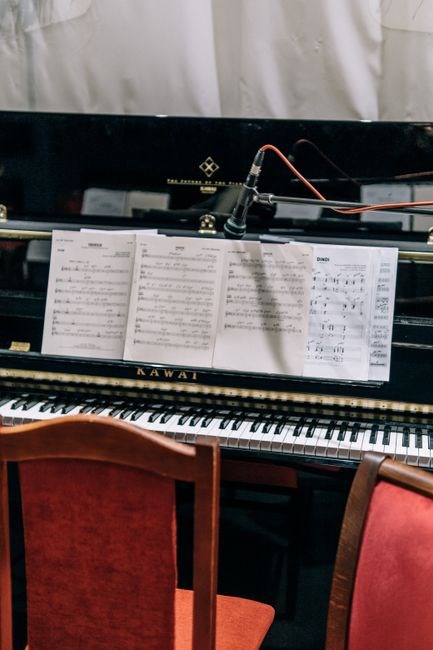
Practicing the Signature Piano Intro
Begin by isolating the opening motif: a repeating arpeggiated figure in E major that sets the contemplative mood. Play the right‑hand pattern slowly, focusing on even attack and consistent tempo. Add the left‑hand accompaniment, following a simple I–V–vi–IV progression; practice it in isolation to master the syncopated rhythm. Once both hands are comfortable, blend them, keeping the right hand’s dynamics subtle while the left hand provides steady support. Record yourself to catch timing discrepancies. Gradually increase the tempo in 10‑BPM increments, ensuring phrasing remains clear. Work on pedal usage: lightly sustain chords to blend texture without blurring arpeggios. When you can play the intro cleanly at 160 BPM, experiment with octave shifts to match the vocal line. Finally, rehearse the intro in different keys (C♯ major, D major) to build flexibility, especially for accompaniment. This systematic approach turns the complex opening into a sure, expressive foundation for the entire piece.

Integrating Lyrics and Chords
When you’re working with the “Runaway” piano PDF, the first step is to overlay the chord symbols above the staff so you can see the harmonic framework while you play. The original track uses a simple I–V–vi–IV progression in E major, so write the chords E, B, C♯m, and A above the corresponding measures. Next, type the vocal line’s lyrics underneath the staff, aligning each word with the beat it lands on. This visual pairing lets you hear how the melodic contour fits the harmonic rhythm. Practice the intro by playing the chords with your left hand while the right hand plays the arpeggiated figure; then add the vocal melody on top. When the chorus hits, pause the piano part and sing the lyrics, then resume the accompaniment. If you want to transpose for a different vocal range, use the PDF’s transpose feature to shift the key, and adjust the chord symbols accordingly. Finally, record a video of you performing the piece, noting any sync issues between the chords and lyrics, and refine until the transitions feel seamless! Additionally, consider recording your practice sessions to analyze timing and dynamics. Experiment with pedal usage enhance the harmonic texture, varying the rhythmic emphasis match the emotional arc of the song.